Skip to content
Talk to us
Manufacturers

Say what you made once. Let the product carry it from there.

You already hold the facts a buyer, an auditor and a recycler will each ask you for separately, years apart. Enter them once at the line and they travel with the unit for the rest of its life.

EnteredOnce, at the line
Answered againNever, by you
Reads the recordAnyone you allow
Depends on usNothing does
Across the lifecycle

You own the first entry. Everything downstream leans on it.

You are the only party who can state what actually went into a unit. Everyone downstream inherits that entry and can only add to it, never quietly amend it, which is why it is the one that has to be right.

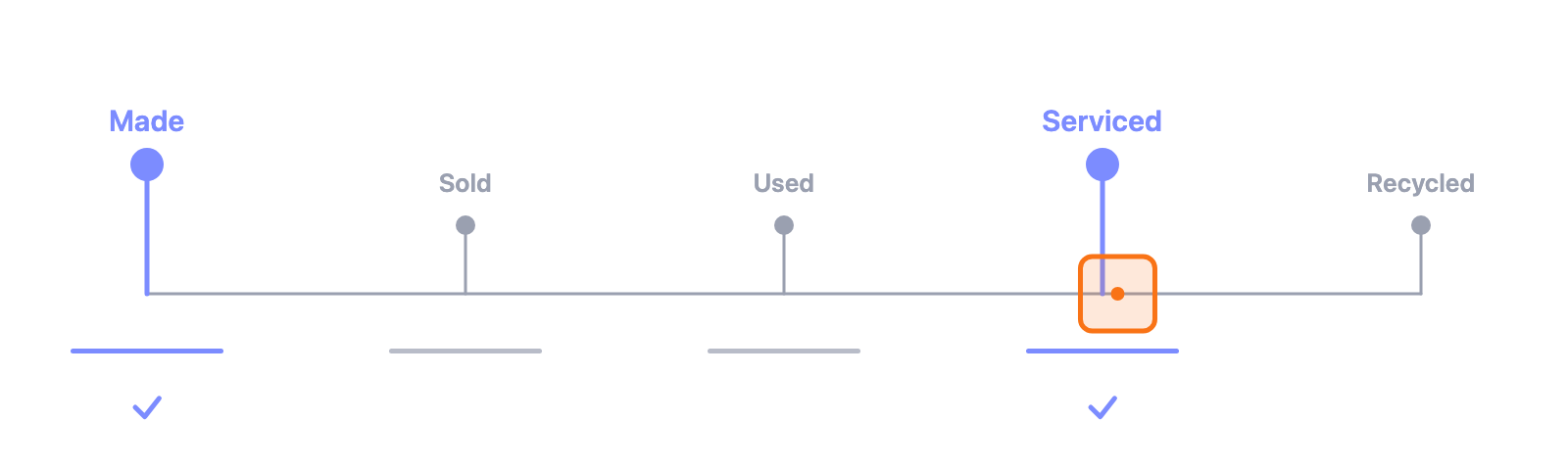
MadeThe first entry. What it is, what went into it, who made it and where. Everything after this points back to it.Yours
SoldCare of the passport moves to whoever holds the product. The history does not reset, and nothing already written can be quietly removed.
In useThe owner reads it, adds to it and proves it is theirs. Private detail stays private to them.
RepairedA service partner adds what they did and what they replaced. The entry carries their name, not the brand’s.Yours
Passed onResold, inherited, or recycled. The story travels with the product, which is what makes the next owner willing to pay for it.

You write the first entry, and every repair you or your partners make after it.

What it gives you

What changes when the unit answers for itself

Not a compliance file you maintain. A record the product carries, that your customers, partners and regulators read directly.

One set of facts, not twelve spreadsheets

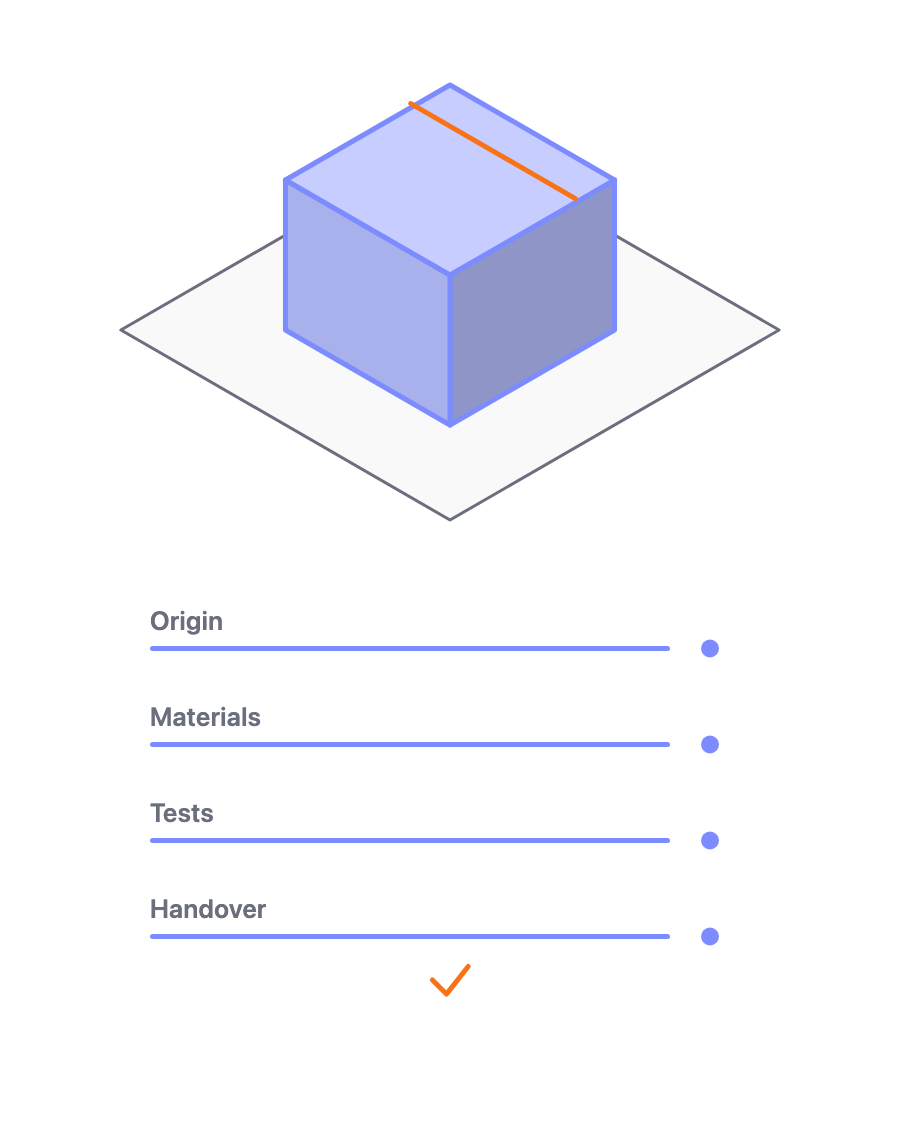
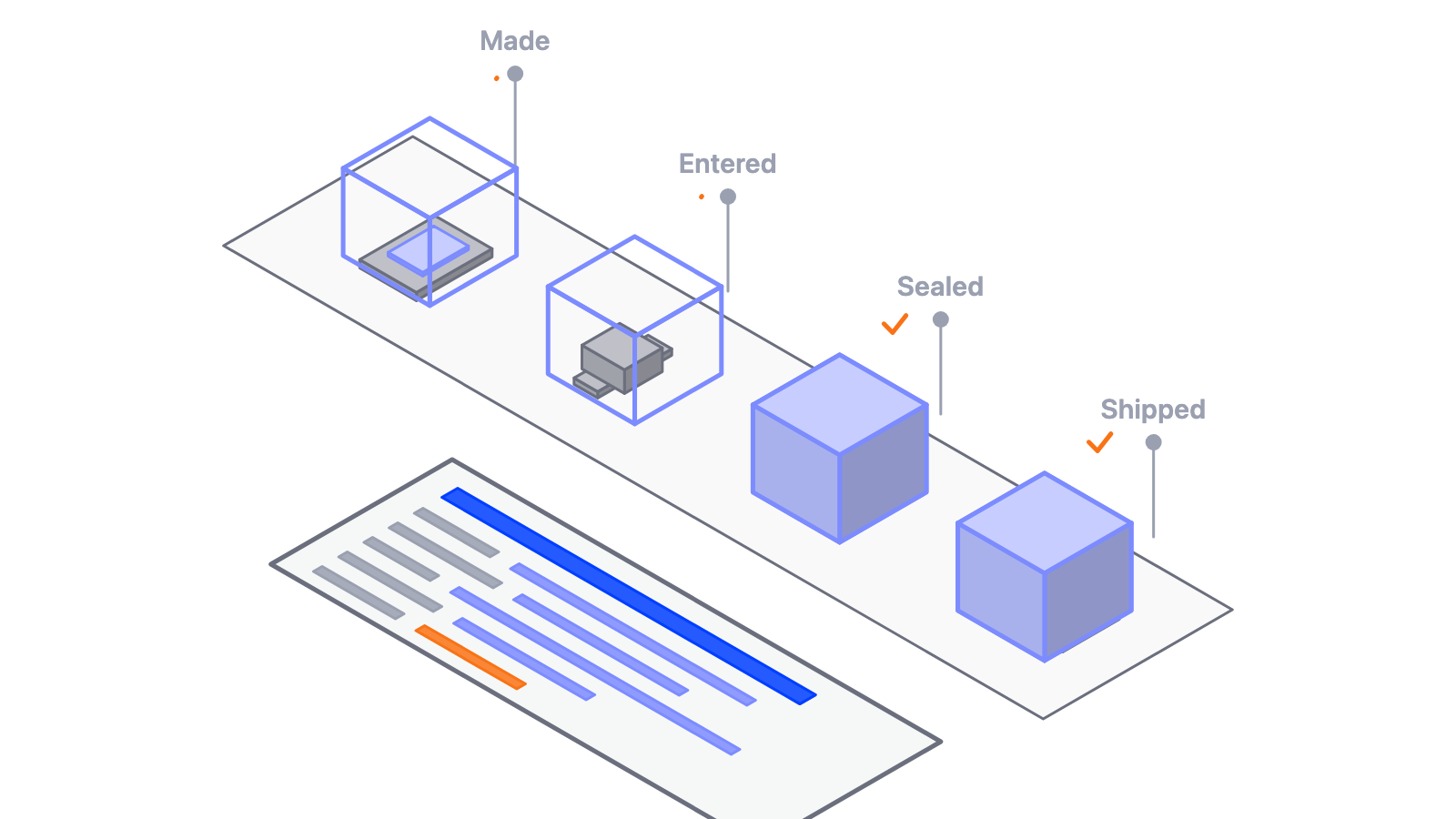
Component origin, recycled content, test results and batch data are entered once, where they are already known. The buyer’s questionnaire, the customer’s label and the recycler’s query become three readings of one entry.

For example. A cell maker supplying three carmakers answers one set of material questions instead of three different formats of the same one.
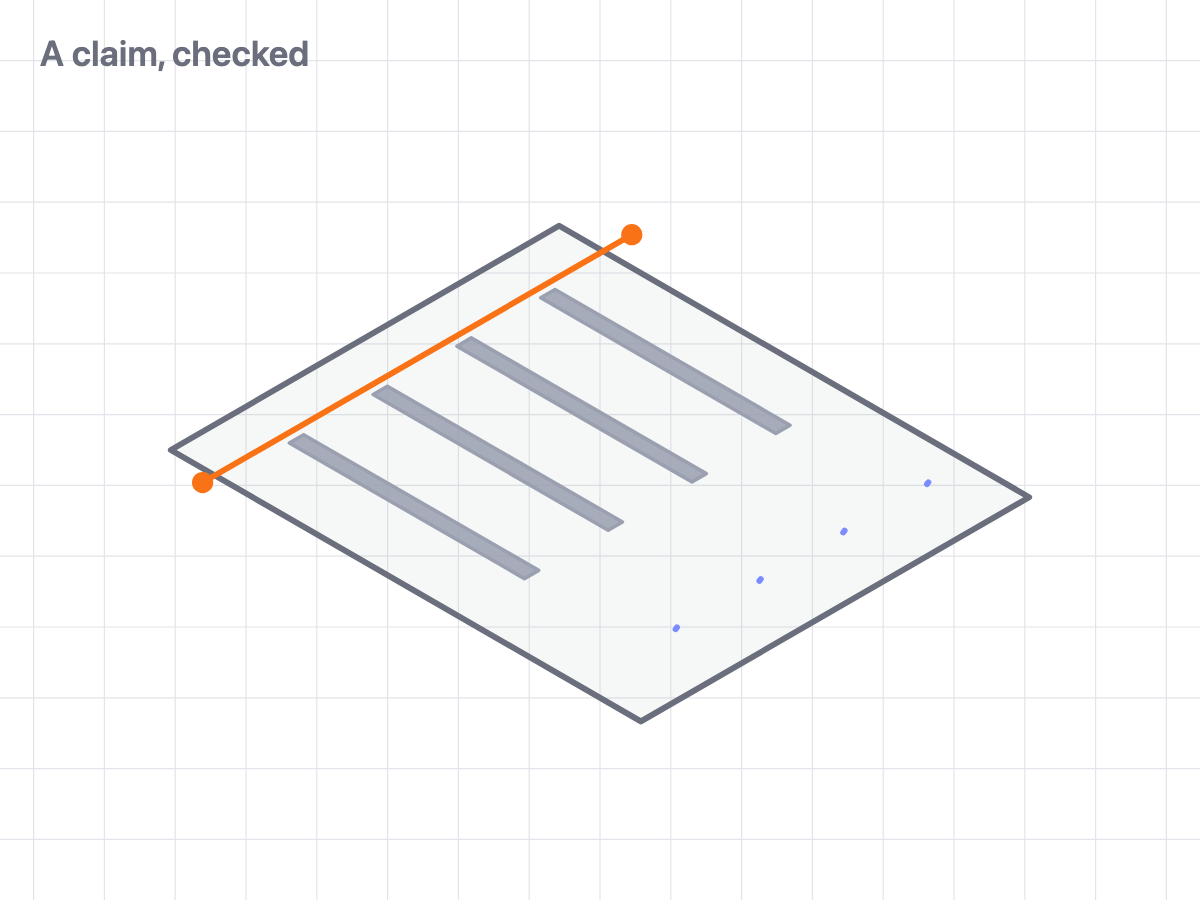
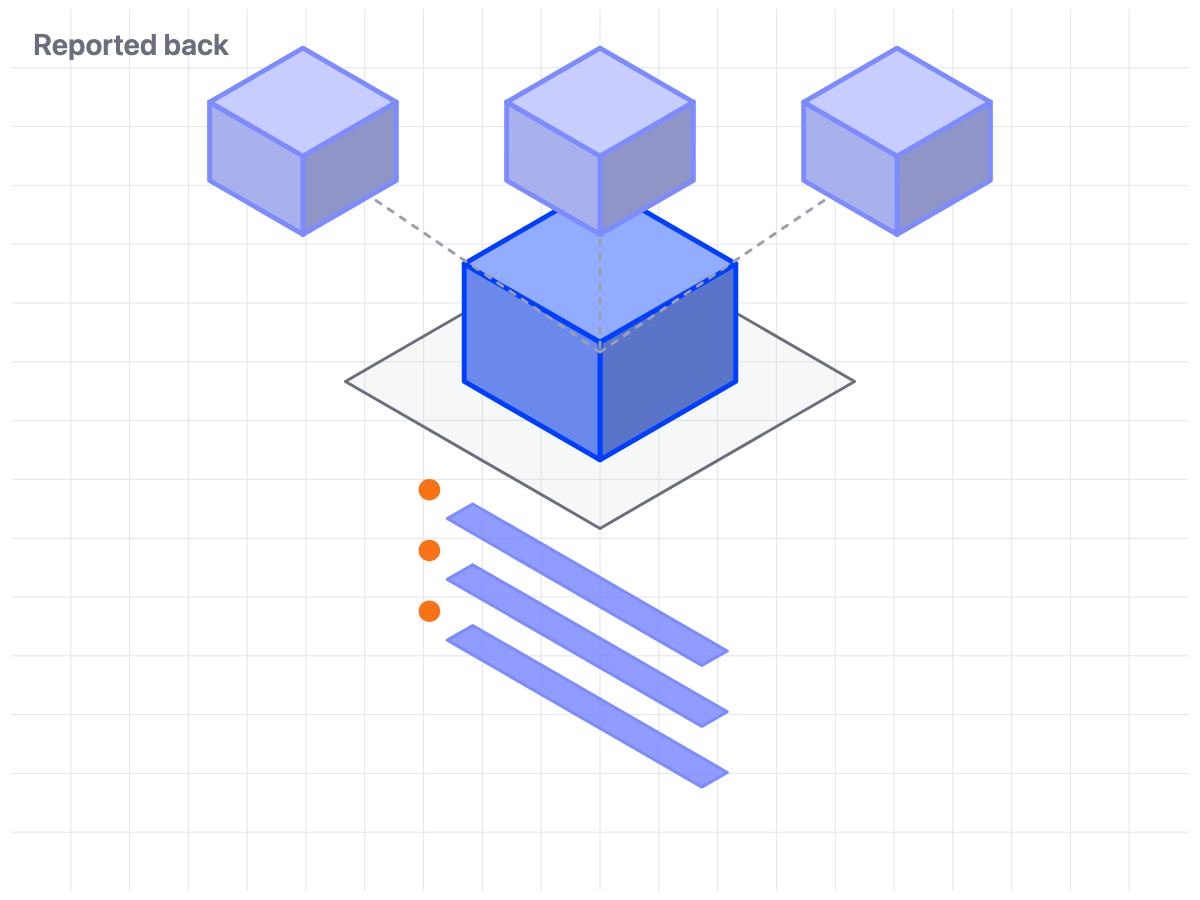
Your claims survive contact with a sceptic

A claim anyone can check is worth more than one they have to accept. Recycled content and test conformance stop being marketing and start being evidence, because the reader confirms them without you in the room.

For example. A recycled-polyester mill can prove its input mix to a brand’s auditor without exposing its supplier list.

The unit stays yours after it leaves

Every later entry, whether a repair, a second life or a recycling event, attaches to the unit you made and names who added it. You see how your products actually age, from the field rather than from a warranty claim.

For example. An industrial battery maker sees which cells reached second-life conversion and which failed early, per batch.

Where the facts live now

Four systems become one line a customer can read.

Test results, batch records, supplier declarations and certificates already exist. They live in four systems that do not talk to each other, and none of them travels with the unit.

Test results, Batch records, Declarations, Certificates become one record, read back as Materials, Origin, Compliance, Repairs.

A worked example

A worked example: one battery module

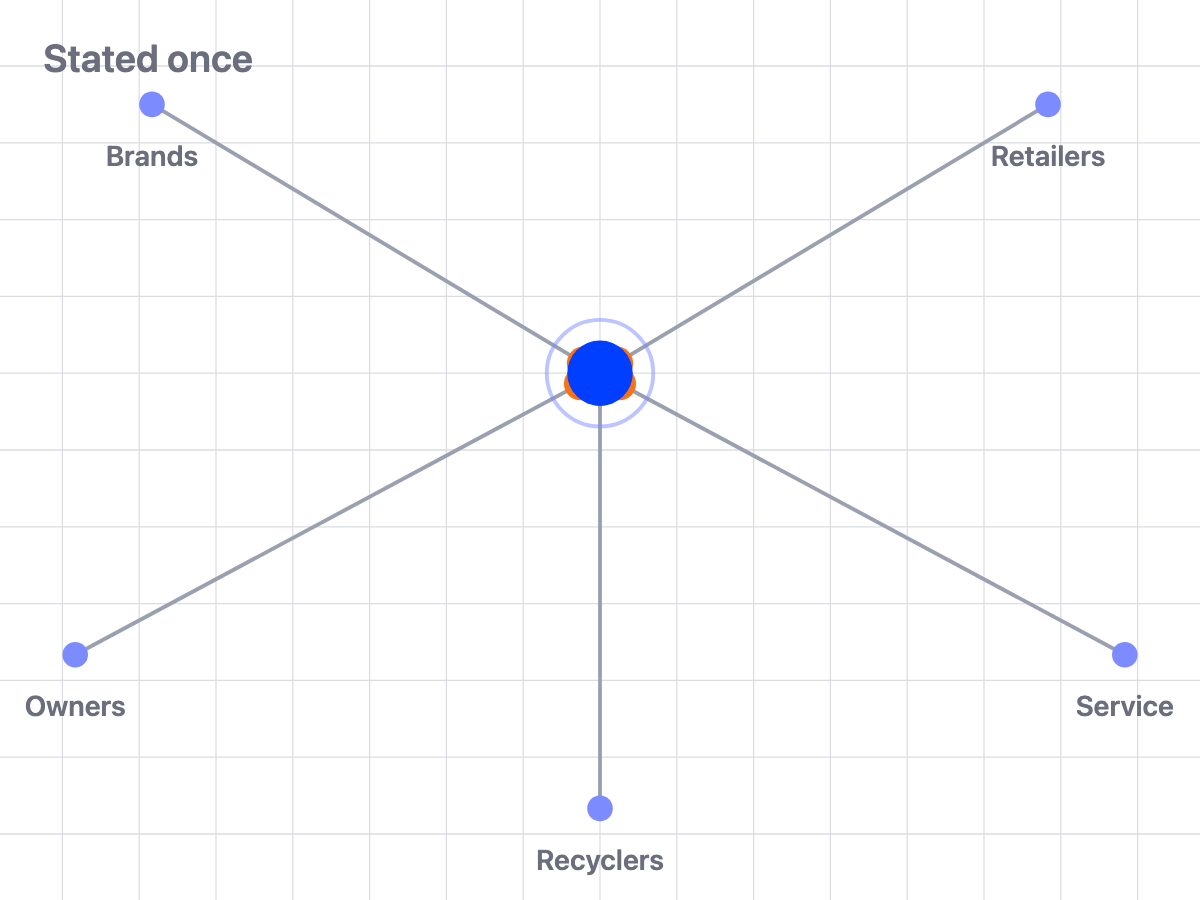
What the maker enters, and what each later reader takes from it. Nothing here is re-keyed by anybody downstream.

You enterChemistry, capacity, batch, recycled content, test results
The carmaker readsConformance and carbon class, at goods-in
The owner readsState of health and what it needs
The service partner addsWhat was replaced, under their own name
The recycler readsExactly what is inside, before it is opened

Five readers, one entry, and the only work you did was the work you were already doing.

Publishing

What it takes to put your own products on this.

Three steps, a field set that comes from the standard rather than from a form we invented, and a deadline that is real for one sector and coming for the rest.

To publish one recordThree steps
Where the fields come fromThe standard
Cost per recordFixed and tiny
Priced per monthNo
How it works

The parts underneath, named plainly.

The parts a manufacturer usually wants named before committing a line to anything. None of it is ours to dictate: each layer is a published standard you could implement without us.

The code on the unit is the link to its passport

The identifier follows GS1 Digital Link, the system already behind the barcodes in your plant. The code you print resolves straight to the record, so there is no second identifier to reconcile. If you assign GTINs and serials, you have the hard part.

The record’s fields are fixed by a published standard

What a passport holds is set by the DPP Token Standard v1, not by our product. That is what makes a record readable by software nobody here wrote, and what stops your data being locked to a supplier.

The lifecycle vocabulary is a W3C community draft

Made, sold, repaired, recycled: each event uses shared lifecycle rules and a native lifecycle claim. Anything reading your products’ histories does not have to learn our dialect first.

Every entry names who made it, provably

Your organisation is identified by a BSV DID, a method published by its authors rather than by us. An entry carries a verifiable claim about who added it, which is what lets a reader trust a partner’s repair record without trusting the partner’s website.

Put one line’s output through it and see what comes back.

Register a product in a demonstration workspace, then open the same record as a customer, a partner and a recycler would.